
on
EMERGING TECHNOLOGIES INNOVATION AND
SUSTAINABLE DEVELOPMENT (ICETIS-2026)
23rd-24th March 2026
on
SUSTAINABLE DIGITAL TRANSFORMATION AND
SMART TECHNOLOGIES

25th Jan. 2026

20th February 2026
---------------------------
26th Feb. 2026

March 5th, 2026

March 10th, 2026

March 12th, 2026
March 23rd 24th,2026
Conference begins in
This proposal outlines the plan to jointly organize an International Workshop followed by an International Conference through a collaborative partnership between Dr. Ashok Gujar Technical Institute’s , Dr. Daulatrao Aher College of Engineering Karad,India and CTIF Global Capsule (CGC), Denmark. The initiative aims to promote high‐quality academic exchange, innovation-driven research, and global collaboration in emerging areas of science, engineering, technology, and sustainable development
The International Conference on Emerging Technologies, Innovation and Sustainable Development brings together researchers, academicians, industry experts, and policymakers from across the globe. The conference serves as a vibrant platform to share recent advancements in emerging technologies and innovative practices. It encourages interdisciplinary discussions that link technological progress with sustainable development goals. Participants present cutting-edge research, case studies, and practical solutions addressing global challenges. Keynote sessions by eminent experts provide insights into future trends and transformative ideas. The event promotes collaboration between academia, industry, and society. Special sessions focus on green technologies, smart systems, and inclusive growth. Young researchers and students gain valuable exposure through paper presentations and interactions. The conference fosters knowledge exchange and capacity building. Overall, it contributes to shaping a sustainable and technology-driven future.
1. To share recent research and advancements in emerging technologies.
SDG 9: Industry, Innovation and Infrastructure

2. To promote innovation-driven solutions for sustainable development.
SDG 9 & SDG 11: Sustainable Cities and Communities

3. To encourage interdisciplinary collaboration among academia, industry, and policymakers.
SDG 17: Partnerships for the Goals

4. To address environmental and societal challenges through technological innovation.
SDG 13: Climate Action & SDG 12: Responsible Consumption and Production

5. To disseminate best practices and case studies in sustainability-focused technologies.
SDG 12 & SDG 9

6. To support young researchers and students through knowledge sharing and exposure.
SDG 4: Quality Education

7. To explore future trends in emerging technologies for inclusive growth.
SDG 8: Decent Work and Economic Growth

8. To promote ethical, inclusive, and responsible use of technology.
SDG 10: Reduced Inequalities & SDG 16: Peace, Justice and Strong Institutions
The objective of the International Workshop on Sustainable Digital Transformation and Smart Technologies is to provide a global platform for academicians, researchers, industry professionals, and students to exchange knowledge on sustainable digital transformation and smart technology innovations. The workshop aims to explore the role of digital and smart technologies in addressing environmental, social, and economic sustainability challenges, while promoting responsible, ethical, and inclusive technology adoption. It encourages interdisciplinary collaboration, dissemination of best practices and real-world case studies, and discussion on emerging trends in sustainable digital systems. The event also seeks to support capacity building and inspire young researchers through expert interactions and knowledge sharing for sustainable development.
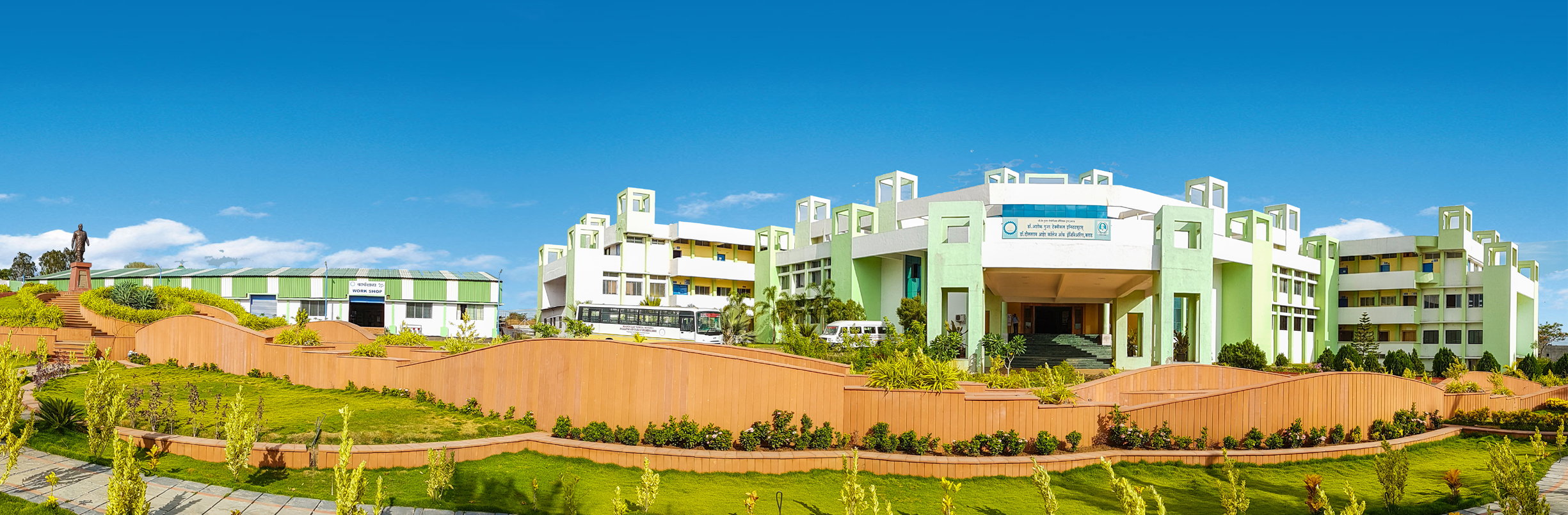
Dr. Daulatrao Aher College of Engineering Karad was established in 2008 by Dr. Ashok G. Gujar, as a part of Shri G. K. Gujar Memorial Charitable Trust’s activities at Karad. The institute is approved by the All India Council for Technical Education (AICTE) New Delhi, Directorate of Technical Education (DTE) Mumbai, and Government of Maharashtra and is affiliated to Shivaji University Kolhapur. The institute offers engineering programs in Mechanical Engineering, Electronics and Telecommunications (E&TC), Civil Engineering, Computer Science and Engineering (CSE) and Artificial Intelligence and Data Science leading to B.Tech. Degree as per Shivaji University Curriculum. Institute is accredited by NAAC and eligible programs are accredited by NBA. The institute has dedicated faculty members and staff and is well equipped with laboratories. The institute has important committees for governance, management and administration. The main objective is to provide quality education to students of engineering. With this aim in mind the management, faculty and staff have commitments towards academic excellence and relevance. We at DACOE, Karad believe in rational and visibility.
The Global ICT Standardization Forum for India (GISFI) is an Indian standardization body active in the area of Information and Communication Technologies (ICT) and related application areas such as energy, telemedicine, wireless robotics, biotechnology. India is playing an increasingly important role in the processes of globalization in the field of the communications, technology, industry and research and development. GISFI is an effort to create a new coherence and strengthen the role of India in the world standardization process by mapping the achievements in ICT in India to the global standardization trends. Further, GISFI is focused on strengthening the ties among leading and emerging scholars and institutions in India and the world, to develop and cultivate a research and development agendaforthefield. GISFI addresses the research and product development of ICT in India and provides a bridge towards the globalization of the Indian achievements, the issues of technology, governance, and development, and a platform for raising an awareness of the importance and the internationalization of the higher education in the field are supported by the joint partnership with the Government of India. The working groups organized in GISFI will draw knowledge from academia, business, civil society, and Government/policy- making circles